Common Mistakes to Avoid When Using a Survival Knife
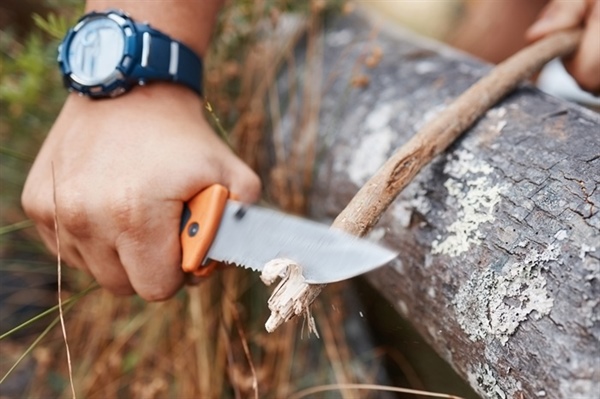
A survival knife is one of the most critical tools you can carry into the wilderness. It’s your partner for making shelter, preparing food, and handling countless unexpected challenges.
But owning a great knife is only half the battle; knowing how to use it correctly and safely is what truly makes it effective. Many users, both new and experienced, can fall into bad habits that reduce their knife's lifespan or, worse, lead to injury.
To help you get the most out of your gear, we've put together a list of common mistakes to avoid when using your survival knife.
1. Using Your Knife to Pry or Dig
It’s tempting to use the tip of your knife to pry open a can, dig in the dirt, or wedge something apart. Don't do it. A knife blade is designed for slicing and cutting.
The tip is the weakest point, and applying lateral force can easily cause it to bend or snap. A broken knife tip makes your tool far less effective for detailed tasks and can be dangerous.
The Risk: You could permanently damage your knife, leaving you with a less effective tool when you need it most.
2. Sharpening Your Knife Improperly
A dull knife is dangerous because it requires more force to make a cut, increasing the risk of slipping. However, sharpening your blade incorrectly can be just as bad.
Using the wrong angle can ruin the edge, while applying too much pressure on the sharpener can remove too much steel, shortening the life of your blade.
Why It's a Mistake: Improper sharpening can create an inconsistent or weak edge that chips or dulls quickly. Take the time to learn the correct angle for your specific knife and use smooth, consistent strokes. A well-maintained edge is a safe and effective one.
3. Neglecting Regular Knife Maintenance
Your survival knife is exposed to dirt, moisture, sap, and other elements that can cause damage over time. Simply tossing it back in its sheath after use without cleaning it is a recipe for rust and corrosion, even with stainless steel.
The Danger: Rust pits the blade, weakening the steel and dulling the edge. Dirt and grit in the handle or sheath can wear down materials and compromise your grip. Always wipe your knife clean and dry it thoroughly before storing it. A light coat of oil can provide an extra layer of protection against moisture.
4. Holding Knives With a Poor Grip
How you hold your knife is fundamental to safety and control. A loose or improper grip can easily cause the knife to slip while you are cutting, which is a primary cause of accidents. Placing your finger on the spine of the blade for pressure is fine for some tasks, but a full, firm grip on the handle is essential for power cuts.
How It Leads to Accidents: A poor grip means you have less control. If the blade hits a tough spot or glances off a surface, it could go in a direction you don’t expect — often toward your other hand or body.
5. Using a Knife for Tasks It Wasn’t Designed For
A survival knife is a versatile tool, but it's not a hatchet, a hammer, or a screwdriver. While techniques like batoning (splitting wood by hitting the spine of your knife with another piece of wood) are acceptable for many fixed-blade knives, you should avoid using the pommel (the end of the handle) as a hammer or the blade as an axe.
The Problem: Using your knife as a blunt-force tool can damage the handle, loosen the blade from the handle, or cause the blade itself to fracture. Respect the design of your tool and use it for its intended cutting and slicing purposes.
6. Over-Reliance On a Single Tool
A survival knife is essential, but it shouldn't be the only tool you rely on. Thinking your knife can solve every problem in a survival situation is a critical mistake. It can lead you to neglect carrying other important gear, like a saw, a multi-tool, or a small shovel.
Why It's a Mistake: Relying solely on your knife puts unnecessary wear on your most vital cutting tool and can put you in a dangerous situation if it breaks.
7. Not Using a Sheath or Carrying Your Knife Unsafely
A quality survival knife comes with a quality sheath for a reason. Carrying a fixed-blade knife loose in a pack or pocket is incredibly dangerous. The exposed blade can cut through your gear or cause a severe injury.
The Solution: Always keep your knife in its sheath when you are not actively using it.
Find Your Essential Survival Knife at Uinta
Avoiding these common mistakes will not only protect you from injury but also extend the life of your trusted blade. A well-maintained knife, used correctly, will be a reliable partner for all your adventures.
Have questions about knife care or choosing the right tool for your needs? The team at Uinta Knife Co. is here to help. Reach out to us, or shop online, and let's make sure you’re prepared for whatever comes next.