Fixed Blade vs. Replaceable Blade for Elk Hunting: Making the Right Cut
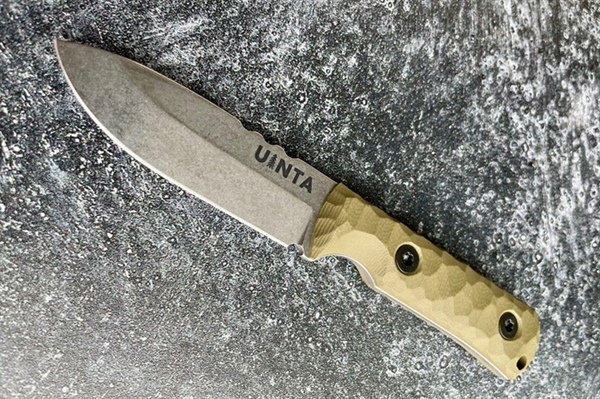
The debate around the campfire is as old as the modern hunting industry itself: when it comes to processing big game, do you rely on a traditional fixed-blade knife or make the switch to a replaceable "scalpel-style" blade?
In recent years, replaceable blades have gained immense popularity, marketed heavily for their surgical sharpness and ultra-lightweight design. However, as any seasoned elk hunter will tell you, breaking down a 700-pound bull is vastly different from skinning a whitetail deer or a pronghorn.
To make the right choice for your backcountry hunt, it is crucial to understand the realities of processing an elk and how these two fundamentally different knife designs stack up against the challenge.
The Case for Replaceable Blades
There is no denying the appeal of a replaceable blade knife. The premise is simple: instead of stopping to sharpen your knife in the field, you safely eject the dull blade, snap on a fresh one, and get back to work. For caping (the delicate process of removing the hide around the face and antlers for a shoulder mount), a scalpel-like blade is an incredible tool. It allows for precision cuts around the eyes, lips, and ears.
However, replaceable blades have a glaring Achilles' heel: lateral strength.
Scalpel blades are incredibly thin and notoriously brittle. When you are working on an elk, you are dealing with thick, coarse hair that is often matted with frozen mud, dense muscle fascia, and massive joints. A slight twist of the wrist while navigating a hip socket or working between vertebrae can instantly snap a replaceable blade. In the best-case scenario, this is an annoying delay. In the worst-case scenario, you are left digging a razor-sharp shard of broken steel out of your hard-earned meat — or your own hand.
The Superiority of the Fixed Blade
This brings us to the traditional fixed blade. A fixed blade doesn't just slice; it acts as a wedge, a pry bar (within reason), and an extension of your own hand. Processing an elk in the field is a heavy-duty mechanical task. When you need to pop a femur out of a hip socket or separate the head from the atlas joint, you need a knife you can bear down on with your full body weight.
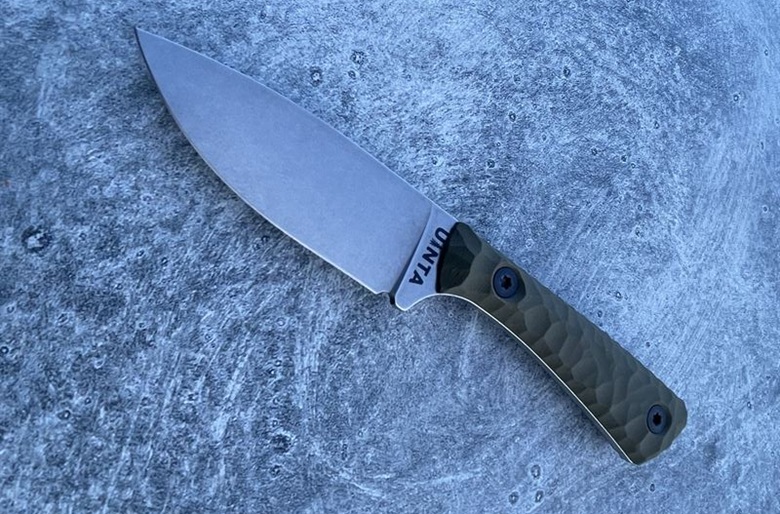
A high-quality fixed blade with a full tang gives you the confidence to apply heavy pressure without fear of catastrophic failure. You never have to worry about a locking mechanism failing or a blade snapping mid-cut. Plus, trying to safely swap out a tiny, slippery razor blade with cold, wet, or bloody hands on the side of a steep mountain is a recipe for disaster.
The industry is increasingly recognizing these heavy-duty demands. A recent article detailing the best Fixed-blade Elk Knives emphasizes that when hunters graduate to larger game like elk and moose, they overwhelmingly return to the rugged reliability of a fixed blade, like Uinta’s Hunter V2 knives.
Why Uinta Knives Are the Ultimate Elk Hunting Tool
At the Uinta Knife Company, we firmly believe that a dedicated elk hunter shouldn't have to compromise between surgical sharpness and rugged durability. You don't need a flimsy disposable blade if you carry a knife crafted from the right materials.
Our Uinta Hunter fixed-blade knife is engineered specifically to handle the rigors of big-game processing. By utilizing premium AEB-L stainless steel or high-carbon steel, our blades achieve a razor-thin cutting edge that glides through meat, yet possesses the metallurgical toughness to withstand the heavy torsion of joint work.
An elk’s thick, dirty hide is notorious for dulling knives rapidly, but Uinta’s precise heat treatment (hardened to 62 HRC) ensures that our knives hold their edge long enough to break down an entire elk without constantly needing to hit the sharpening stone.
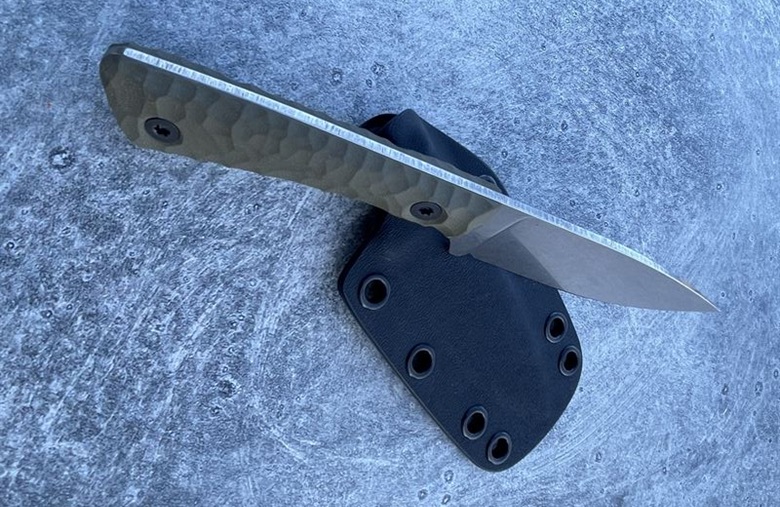
Additionally, the ergonomic G-10 handles on Uinta knives are designed to fill the hand securely, offering a textured, non-slip grip that replaceable-blade folders simply cannot match. Weighing in at a highly packable 3 ounces (or roughly 4.5 ounces with our custom Kydex sheath), the Uinta Hunter proves that you don't have to sacrifice strength to save weight in your pack.
Make the Right Choice: Choose Uinta Knives
While a replaceable blade might earn a spot in your pack strictly for detailed caping work, the heavy lifting of elk hunting demands a real knife. Choose strength. Choose reliability. Choose a Uinta fixed blade for your next backcountry adventure.
Shop all of our knives, tailored for the hunter and outdoorsman in all of us.