How to Properly Clean a Hunting Knife After Use
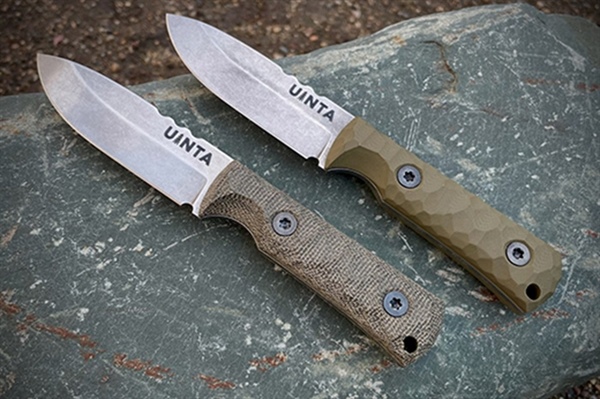
Your hunting knife is likely the most versatile tool in your pack. It processes game, preps your campfire dinner, and whittles kindling to keep you warm. But after a long day in the field, it’s probably covered in dirt, blood, sap, or food residue. Ignoring that mess is the quickest way to ruin a good blade.
Cleaning isn't just about hygiene; it’s about protecting your investment. A well-maintained knife performs better, lasts longer, and is safer to use. Whether you’re wielding the robust Hunter V2 or the ultralight Lightweight V2, proper care ensures your Uinta knife is ready for whatever comes next.
Here is a straightforward guide to cleaning and maintaining your hunting knife after every use.
Why Immediate Cleaning Matters for All Knives
It’s tempting to toss a dirty knife back into its sheath and deal with it later, especially when you’re tired. However, "later" often turns into "never," or at least "too late."
Blood, citrus from fruit, and even certain saps are acidic. If left on the blade, they can corrode the steel, leading to pitting and rust. Even stainless steel — like the high-quality AEB-L used in Uinta knives — is stainless, not stain-proof.
Furthermore, organic matter left in the pivot of a folder or the texture of a handle can breed bacteria, which is a major health risk if you use that same knife for food prep later.
Step-by-Step Hunting Knife Cleaning Guide
The cleaning method depends slightly on what you’ve been doing, but the core principles remain the same.
1. The Initial Field Wipe-Down
Before you even get home, start the cleaning process.
-
Wipe it off: Immediately after use, wipe the blade with a clean cloth or your pant leg, if necessary. Removing the bulk of blood, fat, or dirt prevents it from drying and hardening.
-
Don't sheath a dirty knife: If possible, avoid putting a bloody or wet knife back into its sheath. This transfers the mess into the sheath, which is much harder to clean and can later trap moisture against the blade.
2. Deep Cleaning at Home
Once you're back at camp or in your kitchen, give the knife a thorough wash.
-
Use warm water and mild soap: Dish soap is perfect for cutting through grease and animal fat. Run the water warm, but not scalding hot.
-
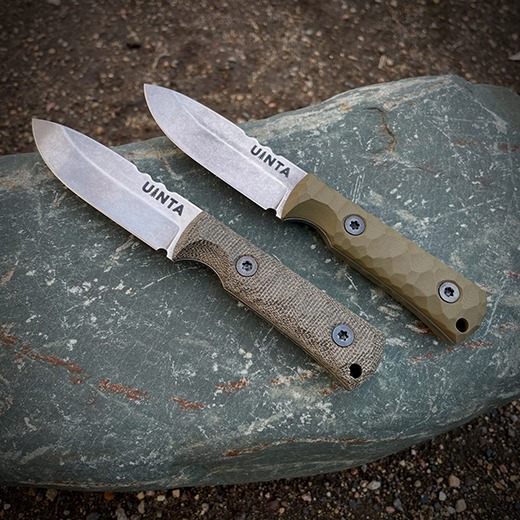
Scrub gently: Use a soft sponge or a non-abrasive brush. For textured handles like Uinta’s signature G10 or Micarta grips, a soft-bristle toothbrush works wonders to remove dirt from the grooves without damaging the material.
-
Avoid the dishwasher: Never put your hunting knife in the dishwasher. The high heat, harsh detergents, and banging around can damage the handle materials, dull the edge, and warp the steel.
3. Cleaning the Handle
Don't forget the handle. Blood and game fluids can seep into handle scales.
-
Synthetic Handles (G10/Micarta): These are incredibly durable and resistant to fluids. Scrub them with soapy water and a brush. If they look a bit dry or chalky after drying, a tiny drop of mineral oil can restore their luster.
-
Paracord Wraps: If you use the Lightweight V2 with a paracord wrap, keep in mind that paracord absorbs fluids. If it gets soaked in blood or gut fluids, you may need to remove the wrap, wash the cord thoroughly (or replace it), and clean the bare metal handle underneath.
4. Drying is Crucial
Moisture is the enemy. Any moisture that remains on your knife can lead to rust and damage. While there are techniques to remove rust from your blade, the best solution is to prevent it from forming in the first place.
-
Dry immediately: Use a clean, dry towel to wipe the entire knife down. Don't let it air dry.
-
Check hidden spots: If you have a folding knife (though Uinta specializes in fixed blades for this very reason — ease of cleaning), use compressed air to blow out water from the pivot mechanism. For fixed blades, ensure the area where the handle meets the blade (the ricasso) is bone dry.
Special Scenarios
Cleaning After Field Dressing
Animal fats and blood can be stubborn.
-
Hotter water helps: You may need slightly warmer water to melt congealed fat.
-
Sanitize: After washing with soap, wipe the blade with a little rubbing alcohol or a food-safe sanitizer to ensure no bacteria remain, especially if the knife will come into contact with food later.
Cleaning Tree Sap
If you’ve been cutting pine boughs or processing wood, you might find sticky sap on the blade. Soap and water often won't touch this.
Use a solvent: A little bit of rubbing alcohol, mineral spirits, or even olive oil can help dissolve the sap. Apply it to a cloth and rub the sticky spot gently until it lifts. Then, wash with soap and water to remove the solvent residue.
Don't Forget the Sheath
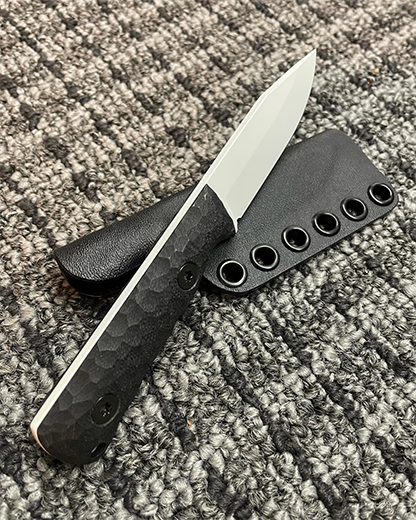
A clean knife in a dirty sheath is a waste of time.
-
Kydex Sheaths: Uinta knives come with molded Kydex sheaths, which are fantastic for hygiene. They don't absorb moisture like leather. To clean them, simply rinse them out with warm, soapy water and let them air dry completely.
-
Leather Sheaths: If you use leather, be careful. Don't soak it. Wipe the inside with a damp cloth if necessary and let it dry slowly, away from direct heat.
Maintenance & Rust Prevention
Once your knife is clean and dry, a little maintenance goes a long way.
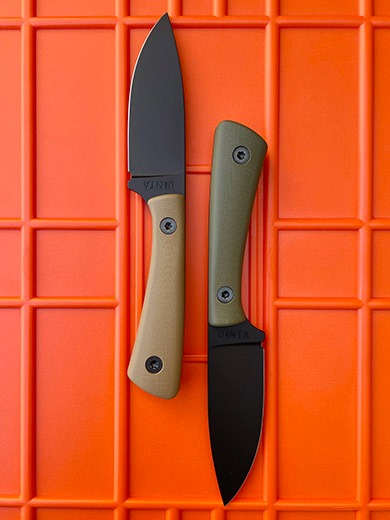
Oiling the Blade
Even with AEB-L stainless steel's excellent corrosion resistance, a protective layer is smart for long-term storage.
Food-Safe Oil: Since your hunting knife likely comes into contact with meat or vegetables, use a food-safe mineral oil. Put a drop on the blade and spread it into a thin film with a clean cloth. This creates a barrier against moisture and oxygen.
Touching Up the Edge
A clean knife reveals the true state of your edge.
Hone it: After cleaning, run your blade over a leather strop or a ceramic honing rod. This realigns the edge and keeps it razor-sharp without removing much metal. Regular honing means you have to do full sharpening sessions much less often.
The Uinta Advantage
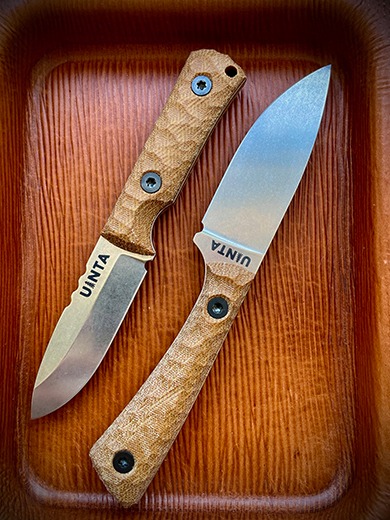
We design Uinta knives to be workhorses that are easy to live with.
-
Stainless Steel Durability: We use AEB-L stainless steel precisely because it balances toughness with high corrosion resistance. It takes a beating and cleans up easily.
-
Hygiene-First Design: Our fixed blade designs eliminate the nooks and crannies where bacteria hide in folding knives. The transition from blade to handle is seamless, and our Kydex sheaths can be washed out in seconds.
Taking five minutes to clean your knife after a hunt ensures it will be ready for the next five years of adventure. Treat your gear with respect, and it will never let you down in the field.
Shop Uinta Knives and discover your favorite hunting knife!