The Anatomy of a Survival Knife: 5 Features That Will Save Your Life
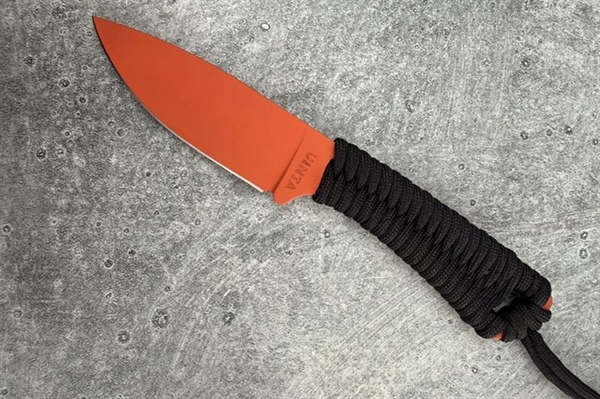
When you step off the grid, the rules change. Whether you are deliberately practicing bushcraft in the backcountry or suddenly find yourself facing an unexpected wilderness emergency, your priorities immediately shift to shelter, fire, and food. In these scenarios, your knife ceases to be just a convenient cutting tool — it becomes your lifeline.
At Uinta Knife Company, we understand the stakes. Founded in Minnesota in 2018, we have spent years crafting tools that are engineered to endure the harshest environments on earth. While our cooking and hunting knives are celebrated for their precision, a true survival knife requires a different breed of engineering. It needs to be a wood chopper, a fire starter, a pry bar, and a precision slicer all rolled into one.
If you are building out your bug-out bag or gearing up for a remote expedition, do not settle for just any blade. Here is the anatomy of a true survival knife and the five life-saving features you absolutely need.
1. A Beefy, Full-Tang Construction
In the survival community, "full tang" is a non-negotiable requirement. A full-tang knife means that the blade steel extends continuously through the entire length and width of the handle.
Why is this so important? In a survival situation, you will likely need to process firewood. The most efficient way to do this with a knife is a technique called "batoning," where you strike the spine of the knife with a heavy piece of wood to drive the blade through a log, splitting it.
A folding knife or a partial-tang knife will snap at the handle under this kind of stress. Uinta survival knives feature a solid, single-piece steel chassis, giving you the structural integrity to bash, baton, and chop without fear of catastrophic failure.
2. High-Performance, Field-Maintainable Steel
A survival knife is only as good as the steel it is forged from. You need a blade that can hold a razor edge through heavy abuse, but it also needs to be tough enough to resist chipping when it strikes a knot in the wood or grazes a bone.
Uinta builds knives using premium high-carbon and stainless steels (like AEB-L) specifically chosen for their balance of toughness and edge retention. High-carbon steel is a favorite among bushcraft purists because it is incredibly tough and surprisingly easy to sharpen in the field with a basic pocket stone. If you anticipate wet, coastal, or snowy environments, a tough stainless steel offers peace of mind against rust while still delivering the brawn necessary for hardcore survival tasks.
3. A Sharp, 90-Degree Spine
This is a feature that amateur knife makers frequently overlook, but seasoned survivalists always look for. The spine (the unsharpened back edge) of a survival knife should not be rounded off or aggressively polished. It needs a crisp, sharp 90-degree angle.
This sharp edge is your primary fire-starting tool. By scraping the 90-degree spine down a ferrocerium rod, you can throw a shower of 3,000-degree sparks to ignite your tinder bundle. It is also incredibly useful for scraping dry bark into a fine dust for tinder, saving the primary cutting edge of your blade from unnecessary dulling.
4. Optimal Blade Geometry & Thickness
A survival knife is a master of versatility. It must be thick enough to pry apart wood and withstand heavy lateral stress, but not so thick that it feels like a sharpened crowbar when you need to clean a fish or whittle a trap trigger.
We design our survival blades with optimal stock thickness and a versatile drop-point geometry. The drop point lowers the tip of the blade closer to the center line of the handle, providing superior control for fine tasks like carving notches for a bow drill. Meanwhile, the robust belly of the blade provides plenty of sweeping cutting edge for processing wild game or slicing through heavy cordage.
5. Slip-Proof, Ergonomic Handle Materials
Imagine trying to carve a tent stake when your hands are numb from the cold, soaking wet from rain, or slick with mud. If your knife handle is smooth plastic or polished wood, you are risking a severe laceration at the worst possible time.
A survival knife requires a handle that provides relentless grip under adverse conditions. That is why Uinta utilizes aggressively textured G10 and natural Micarta for our handles. Micarta, in particular, actually becomes grippier when exposed to moisture, ensuring the knife stays locked in your hand.
Combined with comfortable, hand-filling ergonomics that prevent hot spots and blisters during prolonged use, our handles ensure the tool works with you, not against you.
Uinta: Built For Life
When things go sideways, you cannot afford to second-guess your gear. A survival knife is more than an accessory; it is an insurance policy, especially when cared for properly.
Every Uinta knife is handmade in the USA and paired with a custom-molded, indestructible Kydex sheath designed to retain your blade securely through the thickest brush. We build our tools to be aesthetically pleasing, but more importantly, we build them to get you home safely.
Is your kit ready for the unexpected? Explore our Survival Knives collection and equip yourself with a USA-made tool that is truly built for life.