Fixed-Blade vs. Folding Knives: Which Is Better for Your Next Adventure?
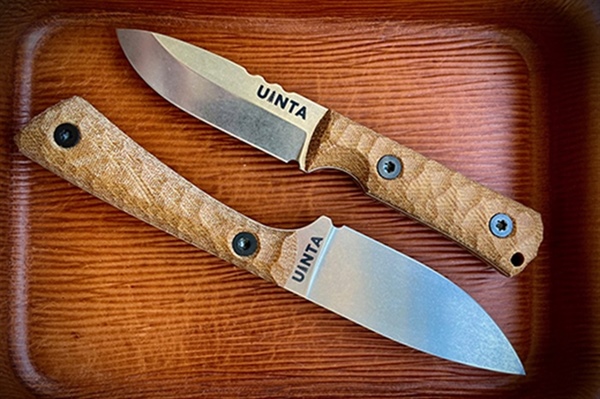
Choosing the right knife for your outdoor adventures is one of the most critical gear decisions you’ll make. It’s right up there with selecting your boots and your shelter. A knife is your primary tool for everything from preparing food and cutting cordage to emergency survival tasks like building a fire or crafting a spear.
When you’re browsing the aisles of an outdoor store or scrolling online, the biggest fork in the road is usually the choice between a fixed-blade knife and a folding knife. Both have their loyalists, and both have their place.
But if you’re heading into the backcountry where reliability isn't just a luxury — it's a necessity — the debate often tips in one direction.
At Uinta Knife Co., we’ve made our stance clear by specializing exclusively in high-quality fixed-blade knives. But we believe in educated choices. Let’s break down the differences, weigh the pros and cons, and explore why we believe a fixed blade is the superior companion for your next expedition.
The Case for the Folding Knife
Before we dive into the powerhouse that is the fixed blade, let’s give the folder its due. Folding knives are undeniably popular, and for good reason. Their primary advantage is portability.
Because the blade folds into the handle, the overall footprint of the knife is halved when not in use. This makes them incredibly convenient for everyday carry (EDC) in urban environments or for hikers who are counting every single gram and square inch of pack space.
Folders are also discreet. You can clip one into your pocket without drawing attention, which is ideal for casual settings. Modern locking mechanisms have made them safer and stronger than the slip-joint knives of the past.
However, that mechanism is also their Achilles' heel. A folding knife relies on a pivot point and a lock. No matter how well-engineered, a pivot is a mechanical weak point. It introduces moving parts that can jam with sand, freeze in the cold, or fail under heavy stress. In a true survival situation, "moving parts" can quickly translate to "broken parts."
Why Fixed-Blade Knives Reign Supreme in the Wild
When you leave the pavement behind, the priorities shift. Convenience takes a backseat to capability.
Here is why the fixed-blade knife is the undisputed king of the wilderness.
1. Unmatched Strength & Durability
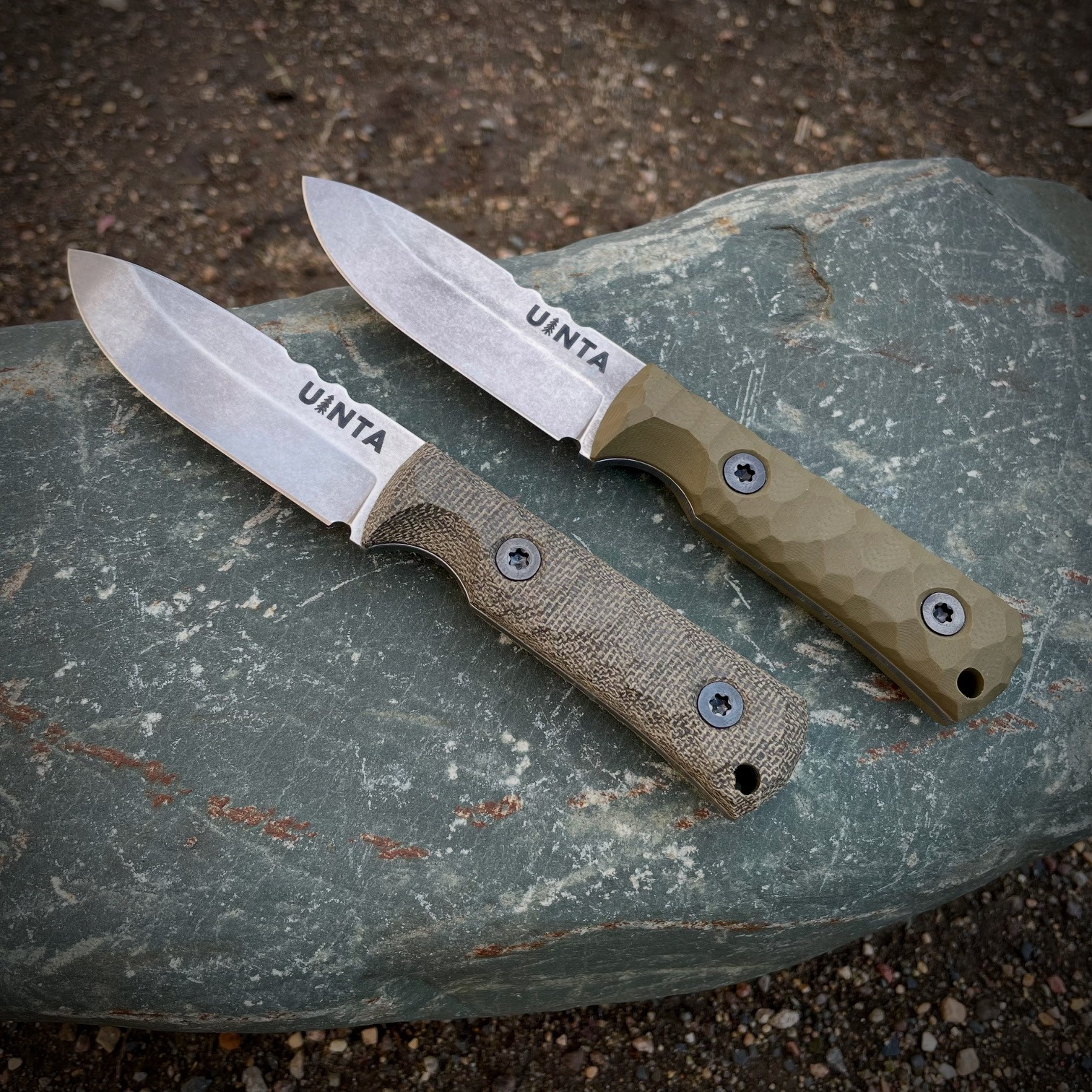
The most significant advantage of a fixed-blade knife is structural integrity. A fixed blade has no moving parts. There is no pivot to snap, no lock to disengage accidentally, and no spring to break. It is a solid piece of steel.
This is particularly true for full-tang knives, such as the Uinta Hunter V2 or Explorer. In a full tang design, the blade steel extends all the way through the handle to the pommel. This effectively turns the knife into a single, continuous tool.
You can apply significantly more force — whether you’re batoning wood for a fire, prying open a crate, or digging for grubs — without worrying that the knife will fold back on your fingers or snap at the hinge.
2. Immediate Deployment
In an emergency, seconds count. A folding knife requires you to retrieve it, orient it, and deploy the blade (often requiring two hands if you’re wearing gloves or if the mechanism is stiff).
A fixed blade is always "open." When sheathed on your belt or pack strap, it is ready the instant you grab the handle. Whether you’re cutting yourself free from a tangle of climbing rope or defending against a threat, the simplicity of "draw and cut" is a tactical and survival advantage that folders simply cannot match.
3. Superior Ergonomics
Because folding knives need to house the blade inside the handle, the handle design is often compromised. It has to be hollowed out to accept the sharp edge, which can lead to uncomfortable hot spots or a grip that feels blocky and unnatural.
Fixed-blade handles are designed purely for the human hand. We can shape materials like G10 and Micarta to fit the contours of your palm perfectly, providing a secure, comfortable grip that won’t cause blisters after 10 minutes of whittling. A solid handle also absorbs shock better than a hollow one, reducing fatigue during heavy chopping tasks.
4. Ease of Maintenance
The wilderness is a dirty place. Mud, blood, sap, grit, and food residue will inevitably end up on your knife.
Cleaning a folding knife can be a nightmare. Gunk gets trapped in the pivot mechanism, between the liners, and inside the locking bar. If you don't clean it perfectly, that grit can grind away at the mechanism or cause rust in places you can't see.
Cleaning a fixed blade is effortless. You wipe the blade, scrub the handle, and you’re done. There are no nooks and crannies for bacteria or rust to hide. This simplicity is vital for hygiene, especially if you use the same knife to dress game and slice your apple for lunch.
5. Versatility for Heavy-Duty Tasks
While a folder can handle light cutting, it generally fails at the heavy-duty tasks often required in survival scenarios.
-
Batoning: Splitting wood by striking the knife's spine is a common survival technique. Doing this to a folding knife will almost certainly destroy the locking mechanism. A thick-spined fixed blade handles it with ease.
-
Chopping: The weight and balance of a fixed blade allow for light chopping duties, which is impossible with the lighter, hinged design of a folder.
-
Prying: While you should never abuse a knife, sometimes you have to pry. A fixed blade offers the lateral strength to handle prying tasks that would snap a folder at the pivot.
The Verdict: Reliable Knives Win
So, which is better for your next adventure?
If you are walking around the city or need a tool solely for opening packages, a folder is fine. But if your adventure takes you into the mountains, the woods, or anywhere the environment is unpredictable, a fixed-blade knife is the superior choice.
At Uinta Knife Co., we build knives for the latter.
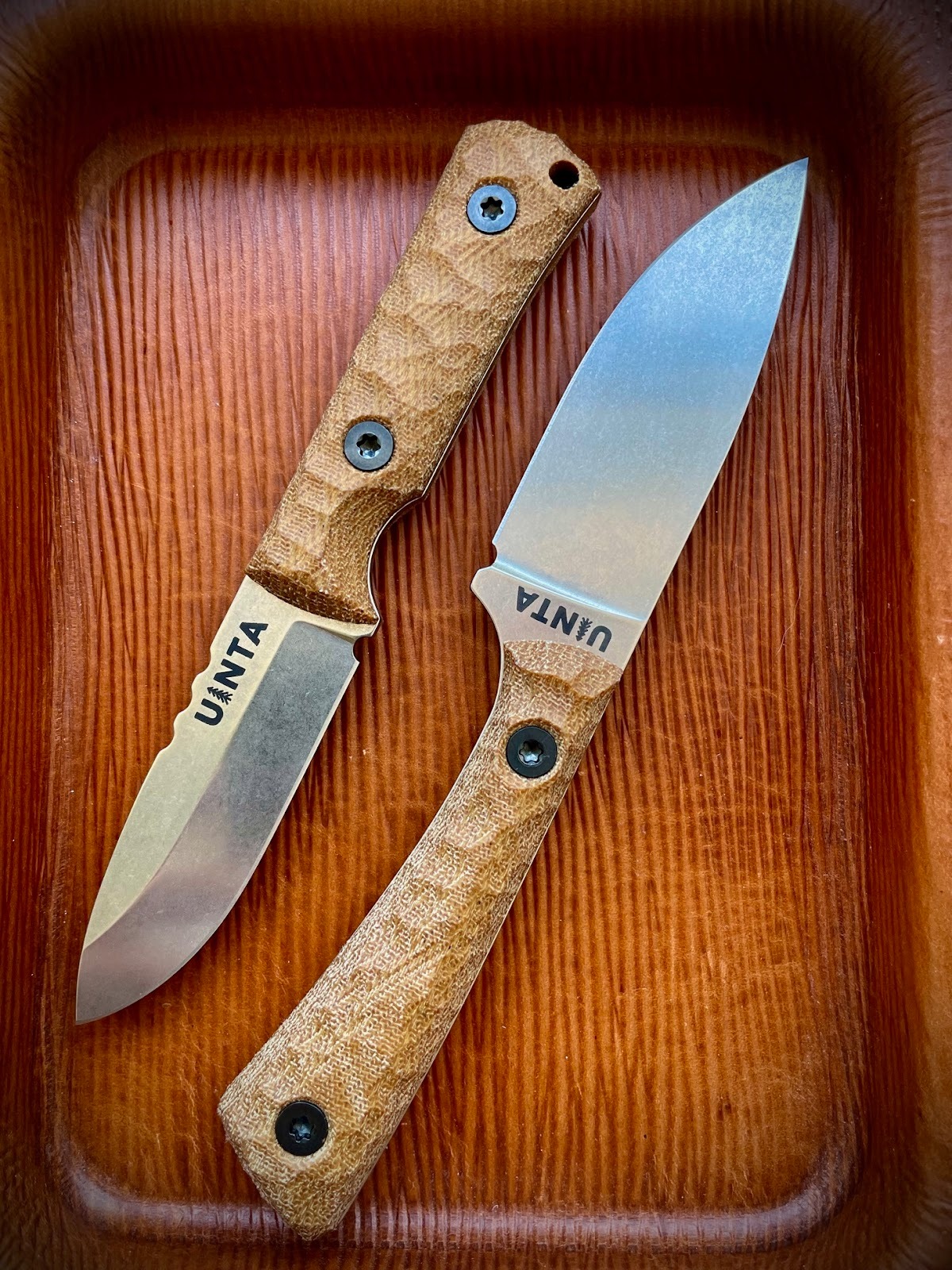
Whether you choose the compact Explorer for precision, the Hunter V2 for all-around utility, or the Lightweight V2 for ounce-counting efficiency, you are choosing a tool that prioritizes strength, safety, and reliability.
In the wild, your gear shouldn't just work when it's convenient; it needs to work when it's critical. Trust a fixed blade to handle the adventure as well as you do. Trust Uinta knives.