How to Choose the Perfect Boning Knife for Your Needs
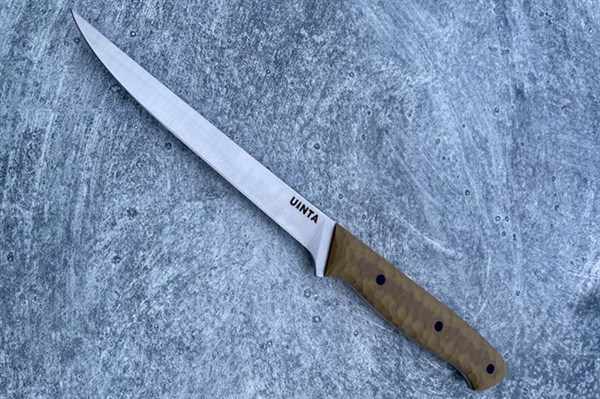
In the world of culinary and outdoor tools, few knives are as specialized as the boning knife.
While a chef’s knife is the jack-of-all-trades, the boning knife is the master of precision. It is designed to go where other knives cannot: between joints, flush against rib cages, and through the tough connective tissues that hold a protein together.
At Uinta Knife Company, founded in Minnesota, we believe every knife should be a work of art that embodies functionality and elegance. Our knives are born from personal necessity and a love for the outdoors.
To help you choose the right tool for your next harvest or gourmet meal, we’ve put together this comprehensive guide on the anatomy and selection of the perfect boning knife.
1. The Great Debate: Flexible vs. Stiff Blades
The most common question we receive is whether a blade should be flexible or stiff. When shopping for a high-quality boning knife, the answer depends almost entirely on the resistance of what you are cutting.
Flexible Blades: The Surgeons of the Kitchen
Flexible boning knives are designed with a thinner profile, allowing the blade to bow and curve. This is essential when working with delicate proteins, like poultry or fish.
-
The Benefit: As you pull the knife along a ribcage or a spine, a flexible blade hugs the bone, ensuring you remove every ounce of meat without gouging into the bone itself.
-
Best For: Breaking down chickens, filleting panfish, and removing silver skin from tenderloins.
Stiff Blades: Power & Leverage
A stiff boning knife offers no give. It is designed for those who need to exert force. When you are processing a large game animal or a heavy primal cut of beef, a flexible blade can become a liability, as it may twist or skip under pressure.
-
The Benefit: Stiff blades provide the leverage needed to pop joints and slice through thick, cold fat and heavy connective tissue.
-
Best For: Butchering venison, elk, or beef, and heavy-duty tasks where control is more important than contouring.
The Uinta Signature: Our boning knives utilize a .100” thick blade profile. This thickness is intentionally selected to provide a semi-stiff feel — rigid enough for heavy field dressing but thin enough to maintain a razor-sharp, nimble edge for kitchen prep.
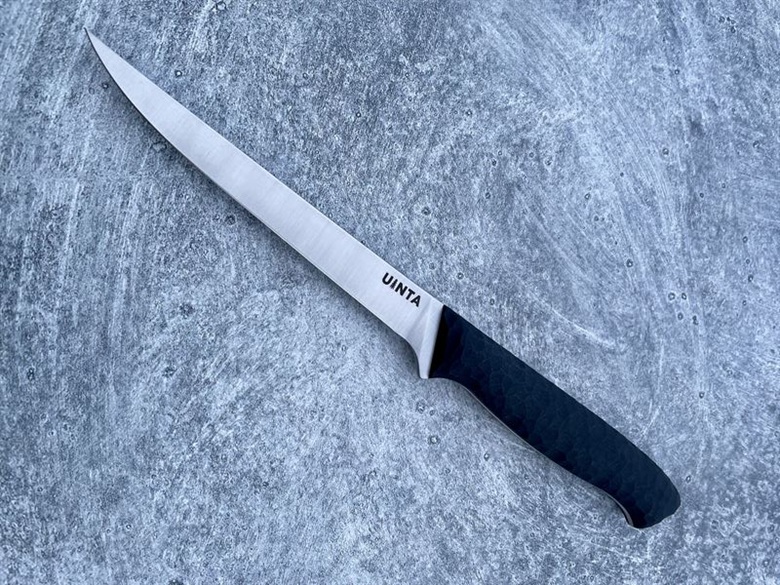
2. Blade Material: The Science of AEB-L Steel
Not all stainless steel is created equal. At Uinta, we craft our boning knives from AEB-L Stainless Steel, heat-treated to a hardness of 62 HRC.
Originally developed for razor blades, AEB-L is a super steel in the culinary world for three reasons:
-
Micro-Grain Structure: AEB-L has an incredibly fine carbide structure. This allows the knife to take a scary sharp edge that is much finer than what you’d find on a standard factory knife.
-
Toughness at High Hardness: Most steels become brittle when hardened to 62 HRC. AEB-L remains remarkably tough, meaning the edge is less likely to chip when it accidentally strikes a bone.
-
Corrosion Resistance: Butchery is a wet job. Blood and moisture are corrosive. Our AEB-L blades are highly resistant to rust and staining, making them ideal for both the high-moisture environment of a professional kitchen and the unpredictable conditions of a hunting camp.
3. Handle Design: Safety Through Ergonomics
When you are deboning meat, your hands are often wet, oily, or cold. A beautiful handle is useless if it’s slippery.
We focus on three pillars of handle design..
Full Tang Construction
A full tang simply means the steel of the blade runs the entire length and width of the handle. This is a hallmark of Uinta craftsmanship. It ensures the knife is perfectly balanced and, more importantly, that the handle will never snap off the blade, regardless of how much pressure you apply.
The Material: G10 & Micarta
We move away from traditional wood for our working knives. Wood can absorb moisture, swell, and harbor bacteria.
Instead, we use:
-
G10: A high-pressure fiberglass laminate that is virtually indestructible and entirely waterproof.
-
Micarta: A resin-based material known for its tacky feel when wet, providing an even better grip when things get messy.
The Pebble Finish
Our signature pebble finish adds a textured dimension to the handle. This isn't just for aesthetics; it creates micro-friction points that lock the knife in your palm, reducing hand fatigue during long butchering sessions and ensuring a secure grip.
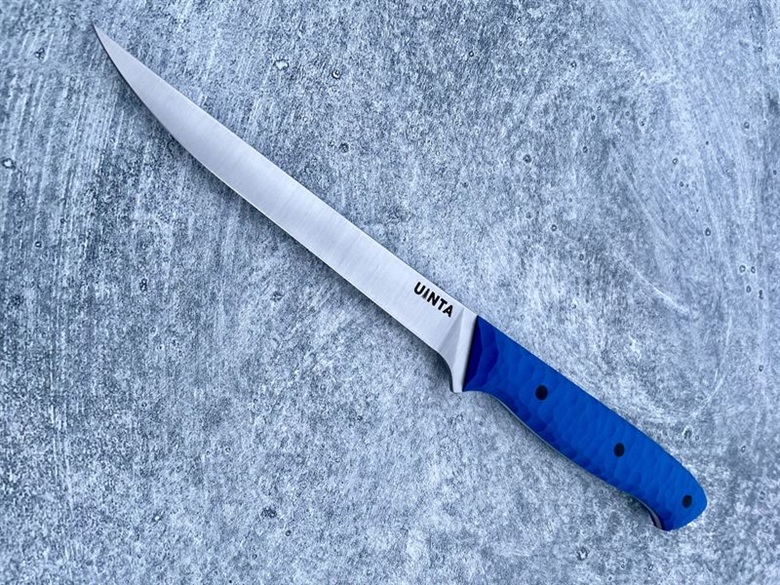
4. Length & Geometry: The 5-Inch Sweet Spot
Boning knives typically range from 5 to 7 inches. A shorter blade offers more control, while a longer blade allows for longer, cleaner sweeping cuts.
Our standard boning knife features a 5-⅛” cutting edge with an overall length of 10-½”. We’ve found this to be the Goldilocks length — short enough to navigate the tight joints of a turkey or a shoulder, but long enough to act as a utility slicer for trimming fat off a brisket when needed.
5. Maintenance: Keeping the Edge
Because our knives are hardened to 62 HRC, they hold an edge significantly longer than mass-produced knives. However, a boning knife's edge is thin and precision-tuned.
Proper knife maintenance is key to keeping it in peak condition:
-
Hone Regularly: Use a ceramic honing rod to keep the micro-edge aligned.
-
Avoid the Dishwasher: The high heat and harsh detergents will degrade the handle and dull the blade. Hand wash and dry immediately.
-
Storage: We provide a molded Kydex sheath with every boning knife. This protects the edge (and your fingers) while the knife is in a drawer or a pack.
A Uinta Boning Knife Is a Tool Built for Life
Choosing a boning knife is about finding a balance between the delicate and the durable. Whether you are a home cook looking to save money by breaking down your own proteins or a hunter who needs a reliable tool to process a harvest in the field, a Uinta knife is designed to be your partner for a lifetime.
Ready to upgrade your kitchen or field kit? Each of our knives is handmade in Minnesota using all-American-made materials. Experience the difference that precision craftsmanship makes.
Explore the Uinta Boning Knife Collection or peruse our selection of hunting, EOC, and cooking knives.